
HALIO BLOG

Science & Insights for Longevity

Expert tips, science, and the latest in light therapy, curated by the Halio team.

Expert tips, science, and the latest in light therapy, curated by the Halio team.

Magazine

Person using a red light therapy wand on the jawline area during an evening skincare routine at the bathroom mirror
halioHow to Use a Red Light Therapy Wand With Your Skincare Routine

Use your red light therapy wand on clean, dry skin with a thin layer of conductive serum or water-based gel applied first. Glide the wand slowly across each facial zone for 3 minutes per area, totaling 10 to 15 minutes per full-face session. Apply your moisturizer and any actives (retinol, vitamin C, peptides) after the session, never before. Use 3 to 5 times per week for visible results in 4 to 12 weeks.

12 min readRead Article

Frequently Asked Questions

Find quick answers to common questions about Halio longevity devices and practices.

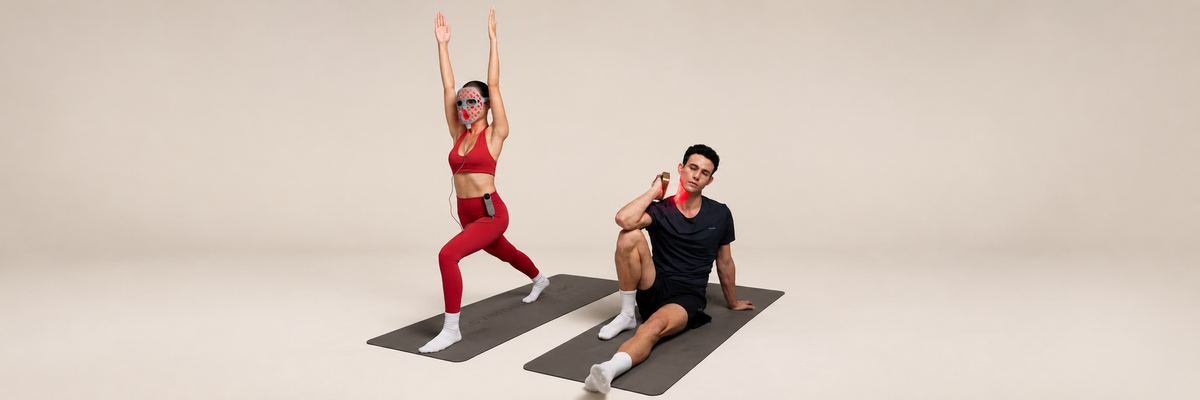
Red light therapy, also called photobiomodulation, uses specific wavelengths of light to support how your cells produce energy. Light is absorbed by an enzyme in the mitochondria called cytochrome c oxidase, which helps cells make more ATP, their main energy source. Wavelength determines depth. Red light acts closer to the surface of the skin, where it supports collagen production. Near-infrared light reaches deeper tissue, including muscles and joints.

Results are gradual, and consistency matters more than session length. For skin, most people see meaningful changes between 4 and 12 weeks with 3 to 5 sessions a week. For joint stiffness, research shows effects typically appear after 2 to 6 weeks at a similar frequency, using near-infrared wavelengths of 850nm or above.

It can help, but it has clear limits. Red light therapy can’t restore the facial volume lost during rapid weight loss, sometimes called “Ozempic face.” It is studied for supporting skin firmness and collagen, which can help skin adapt as your body changes. In a 2026 survey of 504 GLP-1 users, about 4 in 10 noticed skin changes and about 4 in 10 noticed hair changes, usually within the first 5 months. Red light works best as one part of a routine that includes enough protein, strength training, sun protection and advice from a dermatologist.

The research is encouraging for both. Meta-analyses show that red light therapy reduces delayed onset muscle soreness (DOMS) and markers of muscle damage, with the most consistent results when light is applied before exercise. For joints, a 2024 network meta-analysis of 13 randomized controlled trials (673 patients) found that low-level light therapy reduced knee osteoarthritis pain significantly more than a sham treatment. It’s a legitimate recovery tool, not a shortcut, and works best alongside good training, sleep and nutrition.

Laser is more powerful. It uses a single concentrated wavelength, works in fewer sessions, and generally achieves higher long-term hair reduction than IPL. Clinic laser studies report 80 to 94% reduction in selected groups. IPL uses broad-spectrum light and is the more common and accessible option for home use. For most people, the real choice is between treating at home on their own schedule and in a clinic for faster results.